
Microneedling vs Chemical Peel: Which Treatment Is Better for Your Skin?
Key Takeaways
| Quick Verdict | Microneedling is preferred for acne scars and texture; a chemical peel generally wins for tone and sun damage. |
| Ideal Candidate | Anyone choosing between these two non-surgical options for scarring, texture, or sun damage. |
| Timeline | Microneedling: glow within days, real change in 4–6 weeks. 3–4 sessions, 4–6 weeks apart. Chemical peel: results in days to two weeks, typically 3–6 sessions depending on strength. |
| Approach at Serenity | I match the treatment depth to your specific skin concern, never pushing a generic protocol. |
Acne scars, sun spots, fine lines don’t have the same origin, so why expect that the same treatment will fix all three? That’s the real question hiding inside microneedling vs chemical peel consideration.
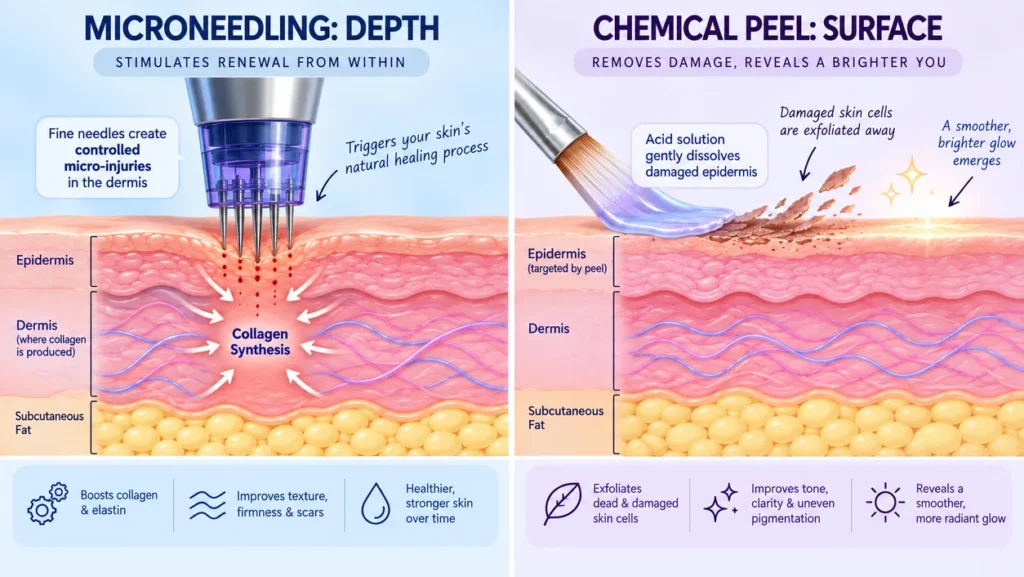
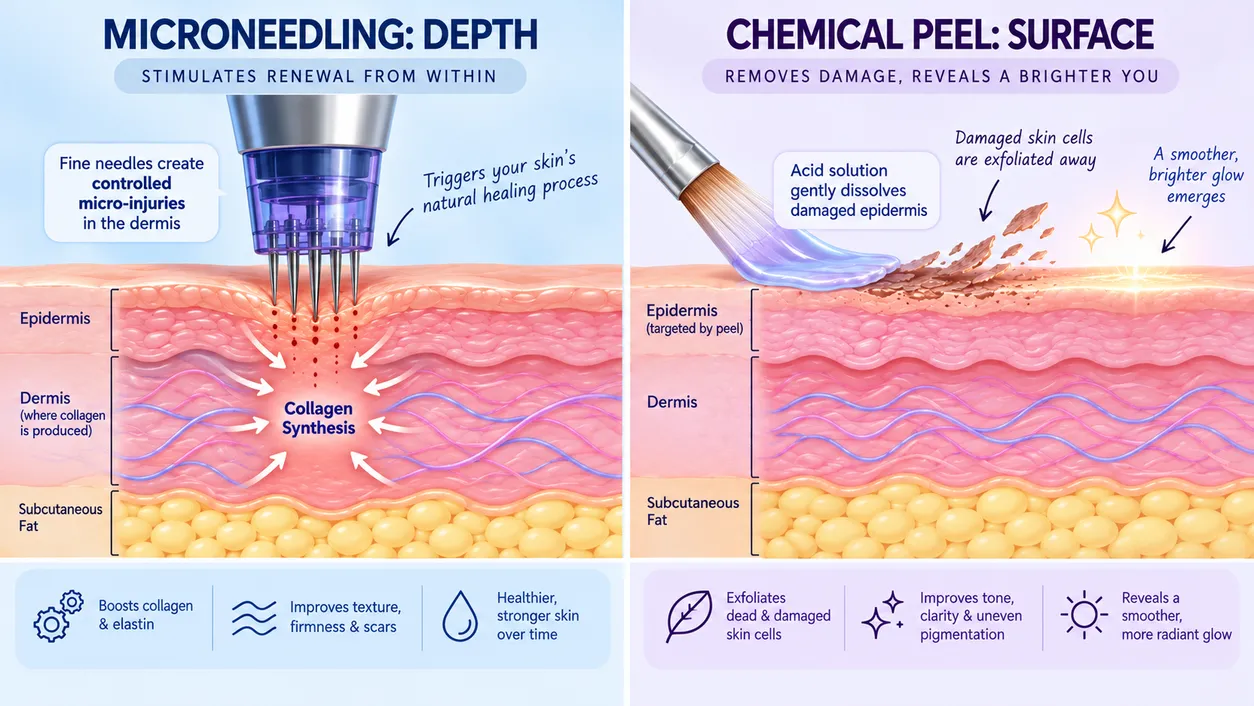
Microneedling works from underneath. Tiny needles are used to create controlled injuries and the skin responds back with new collagen. A chemical peel works from the top down, dissolving the damaged layer away. Microneedling tends to win for scarring, pores, and texture. Peels tend to win for tone, dullness, and sun damage. We, at Serenity Medical Aesthetics in Pasadena, offer SkinPen® microneedling and will say honestly if a peel is better suited for your skin.
Quick Answers for Microneedling and Chemical Peel Queries
| Field | Microneedling | Chemical Peel |
|---|---|---|
| What it treats | Acne scars, fine lines, large pores, uneven texture | Sun damage, hyperpigmentation, dullness, fine lines |
| How it works | Controlled micro-injuries stimulate new collagen and elastin production | A chemical solution removes the top, damaged layer of skin |
| Results timeline | Glow right away; real change over 4–6 weeks | Days for a light peel; up to two weeks for a medium peel |
| Longevity | Months to years, with maintenance sessions | Weeks to months, depending on peel depth |
| Sessions needed | 3–4 sessions, 4–6 weeks apart (more for scarring) | 3–6 sessions, depending on peel strength |
| Downtime | 1-2 days of redness, Sun avoidance for 72 hours | Hours for a light peel; up to a week+ for a medium peel |
| Depth | Works on the dermis, from the inside out | Superficial to medium peel depth, working outside in |
| Booking at Serenity | Available. Book Now! | Available. Book Now! |
What Are Microneedling and Chemical Peels, and How Do They Work?
Both treatments push your skin to fix itself. That’s where the similarity ends. Microneedling works from the inside: fine, sterile needles create controlled micro-injuries in the dermis, and the body responds with new collagen. A chemical peel works from the outside in, using a chemical solution to dissolve and remove the damaged top layer.
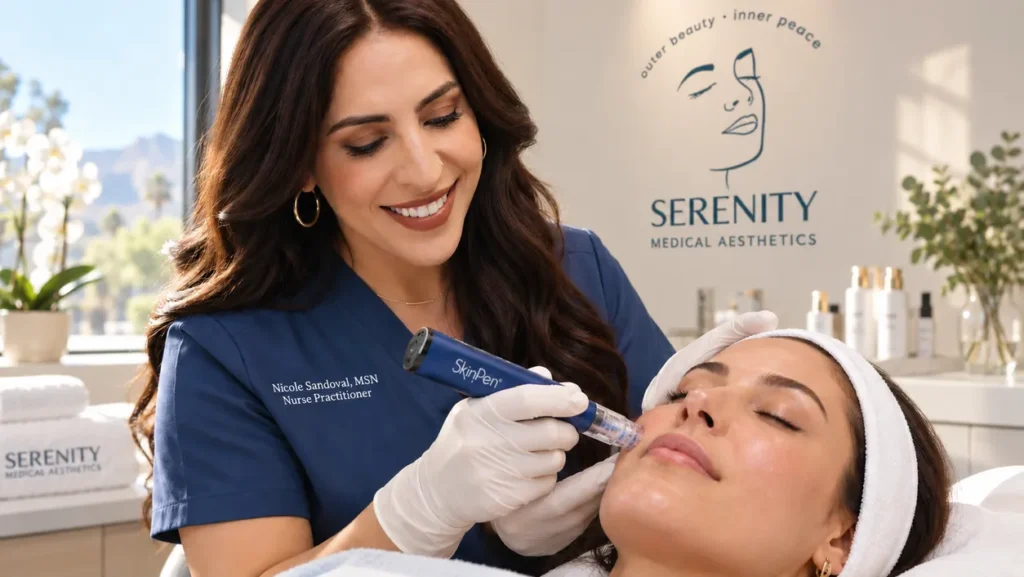
We, at Serenity, use the SkinPen®, an FDA-approved device for microneedling. It is more precise in depth than an at-home roller or an unregulated tool. After thousands of tiny punctures, skin starts rebuilding collagen and elastin on its own. That takes time. Most people see the real shift over four to six weeks, not overnight.
Peels move faster, at least on the surface. Strength matters more than most people expect. A chemical peel uses a customized acid solution, like glycolic acid, salicylic acid, or TCA (Trichloroacetic Acid), to lift only the outermost layer holding dead skin cells. Push into a medium-depth peel and it reaches further into the epidermis: better results, longer recovery. Both treatments solve different problems, which is the whole microneedling vs chemical peel discussion in a nutshell.
Which Is Better for Your Specific Skin Concern?
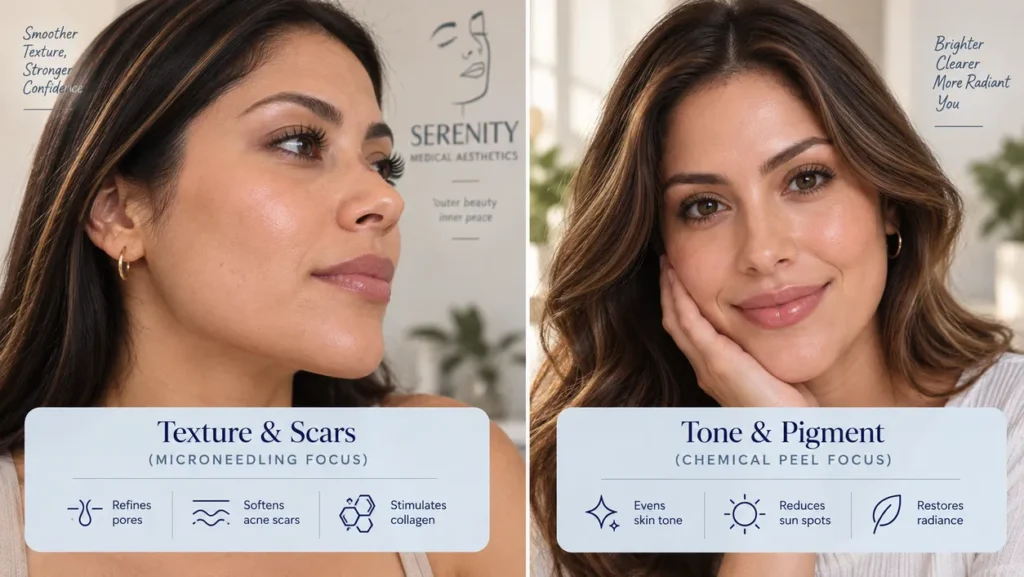
Which one is better between a chemical peel vs microneedling depends on where your concern lives. Deeper, structural issues, like scarring or texture, are solved through microneedling. Surface-level concerns, like tone or pigment, tend to answer to a chemical peel.
Concern by concern, here’s how that plays out:
Microneedling vs. Chemical Peel for Acne Scars
Acne scars are where microneedling tends to pull ahead. A 2022 study put it up against a 35% glycolic acid peel in patients with Fitzpatrick skin types IV–VI. Microneedling came out ahead for atrophic scarring, with less risk of triggering new pigment problems in darker skin. If you’re already prone to hyperpigmentation, that margin of safety isn’t nothing.
Microneedling vs. Chemical Peel for Hyperpigmentation and Sun Damage
Flip the concern to sun damage or hyperpigmentation, and the advantage flips too. Both live mostly in the skin’s outer layer, which happens to be exactly what a chemical peel is built to remove. Dissolve away the damaged surface cells and dark spots fade, tone evens out, often faster than microneedling alone would manage. There’s a catch: peel strength has to match your skin tone to avoid post-inflammatory hyperpigmentation. A consultation at Serenity determines candidacy for your specific Fitzpatrick type.
Chemical Peel or Microneedling for Large Pores and Skin Texture
Pores are trickier. They are a structural issue, not just a surface one, which tips things back toward microneedling. Rebuild the collagen supporting the pore lining and pores gradually look smaller, skin feels firmer. That’s not something surface exfoliation alone can fully manage.
Microneedling vs. Chemical Peel for Fine Lines and Wrinkles
Wrinkles are the one category where it’s a close call. Both treatments help. Both need more than one session to show it. Microneedling rebuilds collagen from underneath; a peel resurfaces from the top. A lot of patients end up doing some staged version of both, rather than picking a permanent side.
Are You a Candidate for Microneedling or Chemical Peel?
| Great Candidate If… | Not Recommended If… |
|---|---|
| Concerned with acne scarring, texture, or enlarged pores | Pregnant, breastfeeding, or have an active skin infection at the treatment site |
| Have darker Fitzpatrick skin types and want a lower pigment-risk option (microneedling) | History of keloid scarring or currently using isotretinoin (microneedling) |
| Concerned with sun damage, dullness, or uneven tone (chemical peel) | Active sunburn, eczema flare, or recent retinoid use without a pre-peel pause (chemical peel) |
| Want a customized or staged combination of both treatments | Prone to melasma or post-inflammatory hyperpigmentation without medical guidance on peel strength |
Why Pasadena People Trust Serenity Medical Aesthetics for Microneedling and Chemical Peels
Nine years as a nurse practitioner. Double board certified, in aesthetics and in family medicine. A Stanford undergraduate, a nursing degree from Emory, and a master’s from UCLA. My résumé is the easy part to write about. The harder part, the part that matters here, is that I perform every treatment myself. No handoff to a technician, no rotating staff.

Serenity Medical Aesthetics is a boutique practice in Pasadena. Not a franchise, not a chain. My approach remains conservative: honest plans, no upselling, no pressure to book more than skin needs. That extends to this exact conversation. If a consultation makes clear that microneedling or a chemical peel is the smarter move, I say that outright. No quietly steering patients toward a particular service.
What to Expect at Serenity Medical Aesthetics: Microneedling and Chemical Peel Appointments
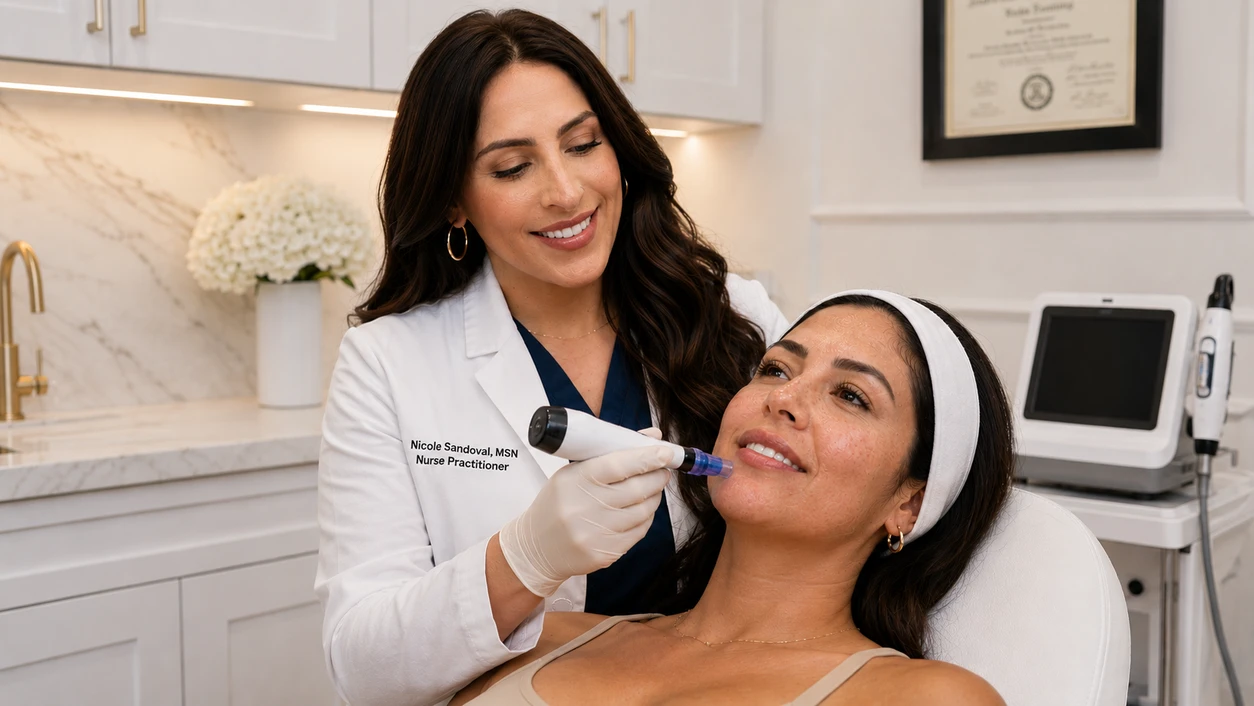
A microneedling appointment at Serenity doesn’t start with a form thrown into your hands. It starts with an actual conversation: I evaluate your skin, listen to your goals, your history, and then decide whether microneedling makes sense at all. The treatment lasts about an hour. Numbing cream goes on first, a specialty compounded blend, so most patients feel light pressure or a warm tingle rather than pain. Afterward: redness, similar to a mild sunburn. Most people are back to normal activities that same day.
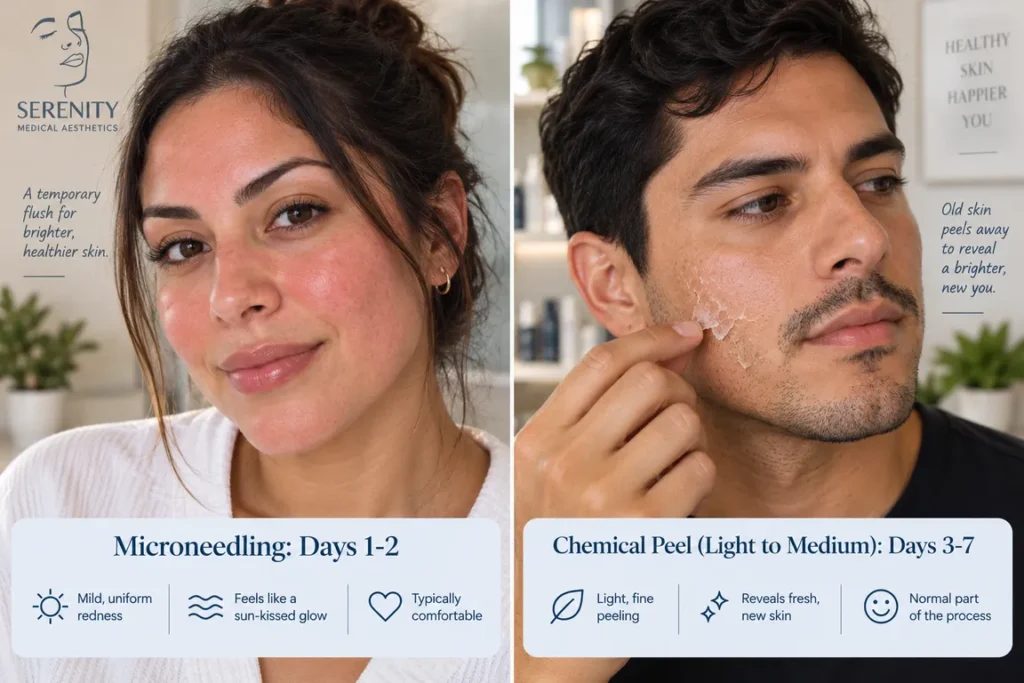
A chemical peel appointment is different. Cleanse the skin, apply the solution for a set number of minutes, neutralize it. That’s the whole visit. Recovery is where the difference shows up: a light peel might mean a few flaky days, a medium peel can mean a week or more of visible peeling. Either path, sun protection afterward is mandatory. New skin is more vulnerable and skipping SPF work against the progress.
Process Timeline
| Phase | Microneedling | Chemical Peel |
|---|---|---|
| Before | Consultation with me; avoid blood thinners as advised | I assess your skin; pause retinoids as advised |
| Day of | About 1 hour: numbing cream, then SkinPen® treatment | 30–60 minutes: cleanse, apply solution, neutralize |
| After | Redness like a mild sunburn, 1–2 days | Flaking or peeling, hours to a week+ depending on depth |
| Results | Glow immediately; full change over 4–6 weeks | Days to two weeks, depending on peel depth |
| Follow-up | 3–4 sessions, 4–6 weeks apart, typically | 3–6 sessions, depending on strength |
Microneedling or Chemical Peel: It’s Time to Decide
Microneedling vs chemical peels is not about finding the superior treatment but matching the correct solution for your skin. This procedure addresses structural concerns like acne scars, enlarged pores, and uneven texture. A chemical peel clears surface-level damage like sun spots, tone, and dullness. Many people end up doing both eventually. Just not on the same day.
Serenity Medical Aesthetics provides a safe, welcoming environment in Pasadena to explore these options. My credentials ensure your treatment prioritizes medical safety alongside aesthetic goals. We invite you to schedule a no-pressure consultation to discuss your skin’s unique needs.
Frequently Asked Questions
Can I alternate between microneedling and chemical peels?
Yes. Many patients achieve the best results through a customized, alternating protocol. For example, we might use microneedling to build structural collagen one month, followed by a light chemical peel the next month to polish the surface.
How long should I wait between a chemical peel and microneedling?
You typically need to wait four to six weeks between different modalities. This allows your skin’s protective barrier to fully heal and the cell turnover cycle to complete before we introduce a new treatment.
Which treatment is better if I have active acne breakouts?
A chemical peel, specifically one containing salicylic acid, is generally safer and more effective for active breakouts. Microneedling is not recommended over active acne because the needles can spread bacteria and worsen the infection.
Does microneedling or a chemical peel tighten loose skin?
Microneedling provides mild skin tightening by stimulating elastin and collagen production deep in the dermis. While chemical peels beautifully improve surface texture and tone, they do not significantly tighten loose or sagging skin.
Can I get these treatments during the summer in Los Angeles?
You can, but strict sun avoidance is required. Because both treatments leave your skin highly vulnerable to UV damage, many Pasadena patients prefer scheduling deeper chemical peels or extensive microneedling sessions during the fall and winter.
Will either treatment help with dark under-eye circles?
Microneedling can gently improve thin, crepey skin under the eyes by building collagen. However, neither treatment resolves dark circles caused by genetics, structural volume loss, or underlying vascular issues.

I am a dual board-certified Nurse Practitioner and the founder of Serenity Medical Aesthetics. With degrees from Stanford, Emory, and UCLA, and nearly a decade of clinical experience, I specialize in family medicine and aesthetic procedures. I also serve as a volunteer Assistant Clinical Professor at the UCLA School of Nursing. I write content on this website to ensure absolute clinical accuracy, safety, and alignment with the latest medical research.
You might also like to read



connect with us on instagram

Back to Top
Address
Phone
301 N Lake Avenue Suite 600 Pasadena CA 91101
hello@serenitymed.co
+1 818-971-9106
✨ Unlock $25 Off Your First Visit! ✨
Sign up to enjoy $25 off your first purchase of $250 or more and get access to exclusive promotions, wellness tips, and booking updates!
Share This Post